
Mechanical parts, cylindrical threaded fasteners for nuts. A fastener consisting of a head and a screw (a cylinder with external threads) in two parts, to be fitted with a nut, for fastening two parts with a through hole.






Automotive manufacturing involves connecting metal components with different thicknesses, materials, and structural requirements. From body panels and mounting brackets to auxiliary equipment housings, many vehicle components require secure fastening points without adding unnecessary complexity to the assembly process.
However, thin sheet metal often presents challenges when creating reliable threaded connections. Limited material thickness may make conventional threading unsuitable, while welding can introduce heat-related concerns and additional production steps. In applications where access to the back of a panel is restricted, installation can become even more complicated.
Pull Rivet Nuts for Automotive provide a practical solution to these challenges. Designed to establish strong mechanical connections in sheet materials, they support single-side installation, accommodate different metal thicknesses and materials, and can provide sealing and waterproofing functions when equipped with suitable sealing structures.
Where Are Pull Rivet Nuts Used in Automotive Manufacturing?
Pull rivet nuts are particularly useful in automotive applications where metal components require secure threaded fastening points. Their application depends on the component structure, material properties, and required connection performance.
Automotive Body Panels and Sheet Metal Structures
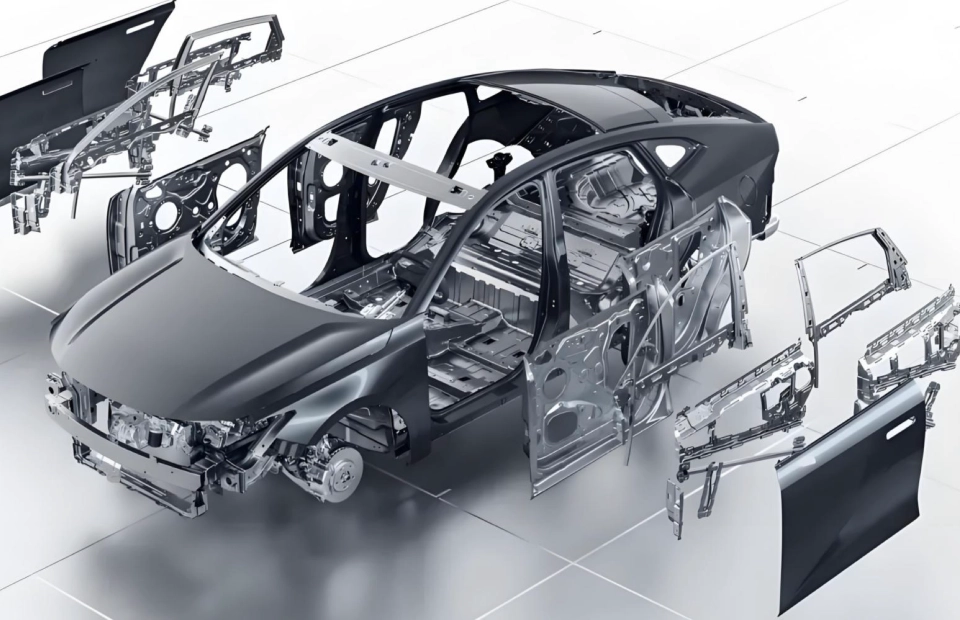
Automotive body structures contain numerous metal panels and sheet components that require reliable connections during assembly. Some of these components have limited thickness, making it difficult to create durable internal threads directly in the base material.
Pull rivet nuts address this limitation by creating an internal threaded connection through mechanical installation. Once properly installed, bolts can be used to attach additional components without requiring threads to be machined directly into the thin sheet.
Another advantage is their ability to connect metal plates with different thicknesses and materials, provided the selected fastener is compatible with the application. This flexibility is valuable in automotive structures where different sheet materials may be combined to meet weight, strength, and design requirements.
Brackets and Mounting Assemblies
Mounting brackets, support plates, and other fastening structures are widely used throughout automotive manufacturing. These components provide attachment points for various vehicle systems and may experience repeated mechanical loads during operation.
For such applications, connection strength is an important consideration. Compared with ordinary rivet nuts, Pull Rivet Nuts for Automotive are designed to provide stronger connecting force, making them suitable for applications with higher load requirements within their specified performance range.
They can establish a stable threaded fastening point in compatible sheet materials, allowing brackets and other components to be secured with bolts. Proper selection of fastener dimensions, grip range, and material is essential to ensure that the connection meets the actual mechanical requirements.
Enclosures and Components Requiring Sealed Connections
Certain automotive components require additional protection against water and moisture. Electrical equipment housings, auxiliary component enclosures, and other metal assemblies may contain fastening points where water ingress needs to be controlled.
In these applications, Pull Rivet Nuts with suitable sealing designs can provide both mechanical fastening and sealing functions. Their waterproofing capability helps reduce the risk of moisture entering through the connection area.
This feature is particularly valuable when fastening requirements involve both structural stability and environmental protection. The actual sealing performance depends on the product's sealing structure, installation quality, and operating conditions.
How Do Pull Rivet Nuts Provide Secure Connections in Automotive Applications?
The performance of a Pull Rivet Nut depends on its mechanical structure and how it is installed. Unlike conventional nuts that require access to the opposite side of a workpiece, pull rivet nuts can establish a fixed threaded connection through a single-side installation process.
Creating a Strong Mechanical Connection
Installation begins with preparing a hole that matches the specified fastener dimensions. The Pull Rivet Nut is positioned in the hole, and a dedicated installation tool applies an axial pulling force to deform its body.
As the tool pulls the mandrel, the deformation section expands behind the sheet material, creating a mechanical clamping structure. This secures the fastener to the workpiece while leaving the internal thread available for subsequent bolt installation.
The resulting connection provides a fastening point without requiring the thin sheet itself to carry the entire threaded engagement. For applications involving relatively heavy loads, selecting a Pull Rivet Nut with suitable connecting force is particularly important.
Supporting Single-Side Installation
One of the practical advantages of Pull Rivet Nuts is their ability to be installed from one side of the workpiece.
In automotive manufacturing, some components are positioned inside enclosed structures or surrounded by other assemblies. Accessing the rear surface may be difficult or impossible during installation.
Single-side installation eliminates the need for simultaneous access to both sides of the panel. This simplifies fastening operations in restricted spaces and makes the product suitable for certain complex automotive assembly structures.
It also reduces the need for additional positioning operations, helping streamline the installation process.
Simplifying the Installation Process
Fast installation is another important consideration in automotive production, where repetitive assembly operations can influence overall manufacturing efficiency.
Pull Rivet Nuts feature a relatively simple installation process when used with compatible tools. Once the installation hole and fastener specifications are confirmed, the fastening operation can be completed efficiently.
Their straightforward mechanical structure and installation process can help reduce assembly complexity and support cost-effective production. These characteristics are particularly useful in applications involving repeated fastening operations and multiple sheet metal components.
What Makes Pull Rivet Nuts a Practical Fastening Solution for Automotive Manufacturing?
Beyond establishing threaded connections, Pull Rivet Nuts offer several benefits that address common automotive assembly requirements.
Stronger Connections for Demanding Applications
Compared with ordinary rivet nuts, automotive Pull Rivet Nuts provide stronger connecting force and are suitable for applications involving relatively heavy loads. This makes them a practical option for certain brackets, mounting structures, and metal assemblies that require dependable mechanical fastening.
However, actual load capacity should always be evaluated according to product specifications and application-specific testing.
Improved Sealing and Connection Protection
For components exposed to moisture, sealing performance can be just as important as mechanical strength. Pull Rivet Nuts featuring appropriate sealing structures can help prevent water from entering through fastening points.
This provides additional protection for automotive assemblies where moisture control is necessary. Selecting the correct sealing design and following the specified installation procedure are essential for achieving the intended waterproofing performance.
Faster Assembly with Cost Efficiency
A simple structure and fast installation process can contribute to more efficient automotive assembly. Single-side installation also reduces operational difficulties in locations where rear access is restricted.
By combining installation convenience with reliable fastening performance, Pull Rivet Nuts can help simplify certain production processes while offering a cost-effective connection solution.
What Should Be Considered When Selecting Pull Rivet Nuts for Automotive Applications?
Choosing the right Pull Rivet Nut requires more than matching the thread size. Several technical factors should be evaluated to ensure compatibility with the intended automotive application.
| Selection Factor | Why It Matters |
| Sheet Thickness | Determines the required grip range and installation compatibility. |
| Material Compatibility | Helps ensure reliable connections and reduce corrosion risks between different metals. |
| Connecting Force | Determines whether the fastener can withstand the expected mechanical loads. |
| Sealing Requirements | Identifies whether a waterproof or sealed design is necessary. |
| Installation Space | Determines whether single-side installation is required. |
| Thread Size | Ensures compatibility with the bolts and connected components. |
For example, a Pull Rivet Nut used in a mounting bracket may require different load-bearing characteristics from one installed in a sealed equipment enclosure. Similarly, connecting dissimilar metal sheets requires consideration of material compatibility and potential galvanic corrosion.
Installation hole diameter, grip range, and tool settings should also follow the manufacturer's specifications. Incorrect installation may affect clamping performance, connection strength, and sealing reliability.
How Can Proper Pull Rivet Nut Selection Improve Automotive Assembly?
In automotive manufacturing, even a small fastening component can influence the stability and reliability of an entire assembly. An unsuitable fastener may result in insufficient clamping force, fastener rotation, material damage, or water leakage around the connection.
Selecting the appropriate Pull Rivet Nut helps address these challenges by matching the fastening solution to the sheet materials, load requirements, and installation environment.
With stronger connecting force, single-side installation capability, and optional sealing and waterproofing functions, Pull Rivet Nuts for Automotive provide a versatile fastening solution for compatible automotive sheet metal applications. Careful product selection and proper installation help achieve reliable connections while supporting efficient and cost-effective manufacturing.